ASSISTIVE TECH & ACCESSIBILITY
Visual AI companion for the blind and low-vision
AiSee is a smart headphone device that empowers those with visual impairments to live independently.

The Challenge
For blind and low-vision users, experiencing the world beyond simple navigation in unfamiliar environments typically requires a sighted companion. To understand how an AI guide could alleviate the need for a physical presence and empower their users' independence, we collaborated with AiSee on a specific use case for their device: how users might navigate and experience outdoor spaces, such as parks.
The Outcome
Our engagement involved conducting user research to deliver insights and artefacts for future development. This work was also one component of a successful grant pitch for AiSee.
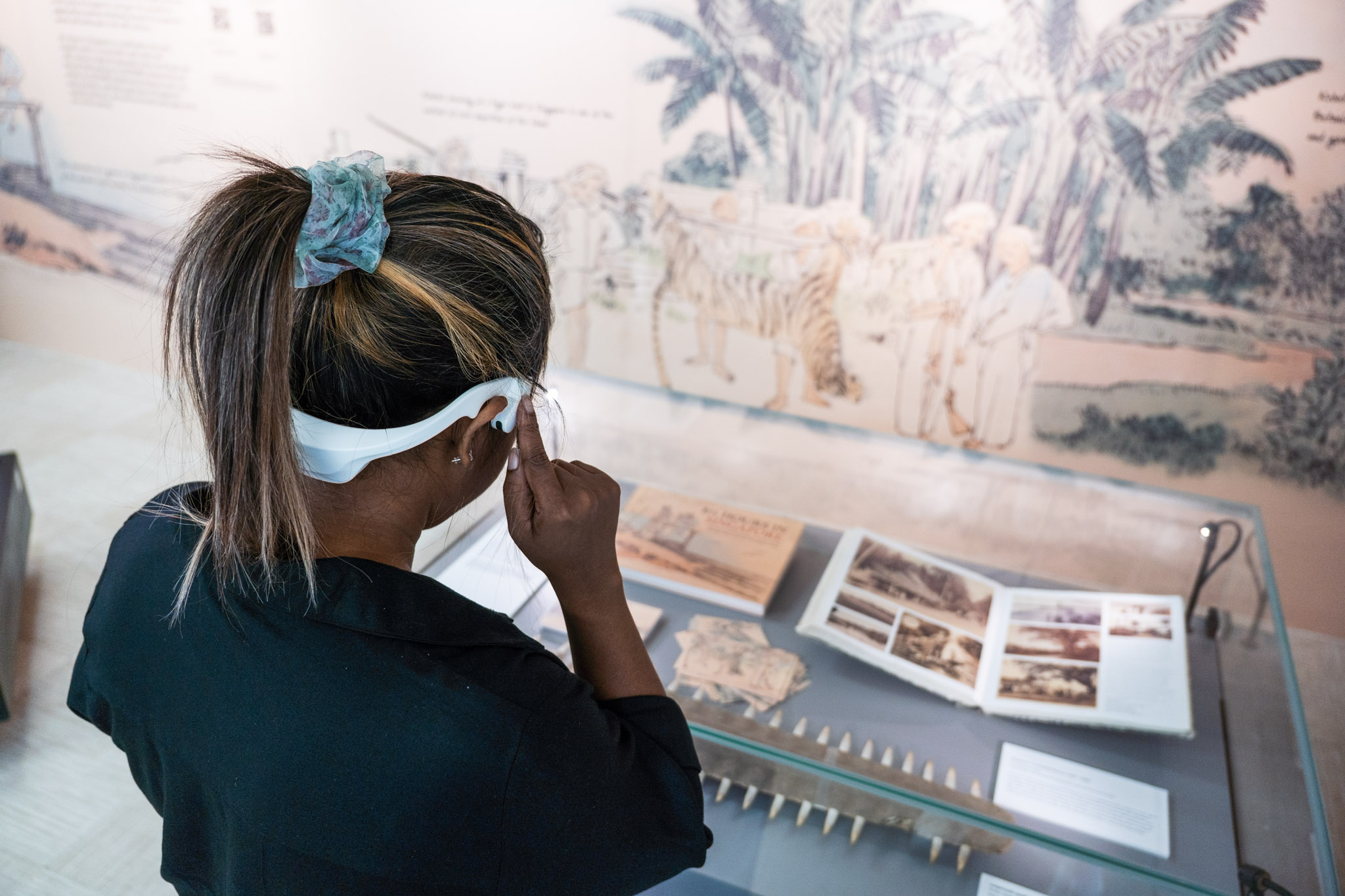
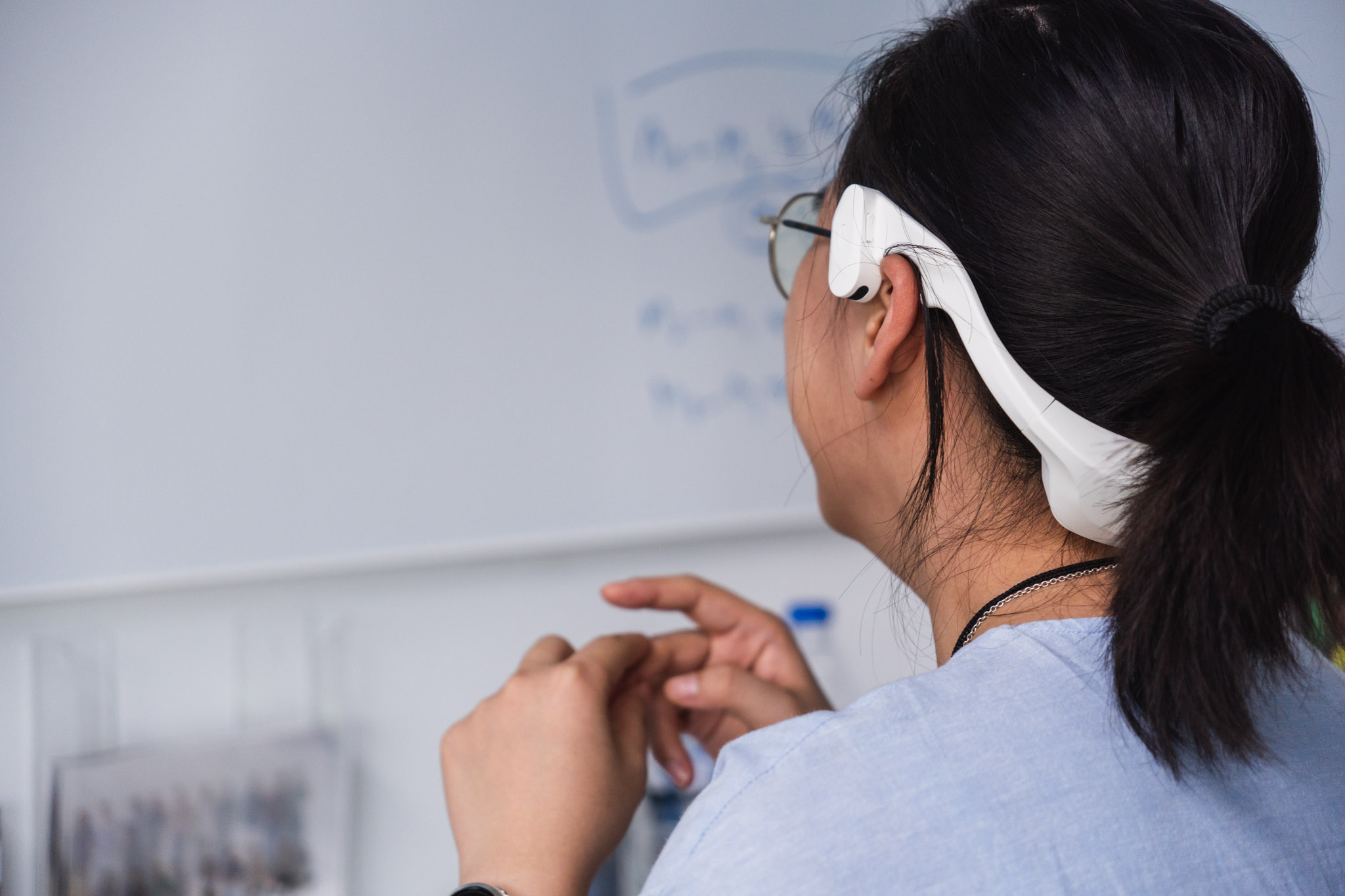
Photos of the device
1. User Engagement:
Interviews & Observations
We spoke to users who were both completely blind and with varying degrees of vision loss to understand their experiences in everyday life. From there, we focused specifically on activities for leisure and spending time outdoors, including experiences of navigation, situational awareness, and feelings of enjoyment and frustration.
We also facilitated observations for the AiSee team by conducting visits to a park with users and simulating how users may potentially visit the park on their own with an AiSee device. Users spoke of their experiences and frustrations directly at the scene, allowing us to construct richer insights for AiSee.
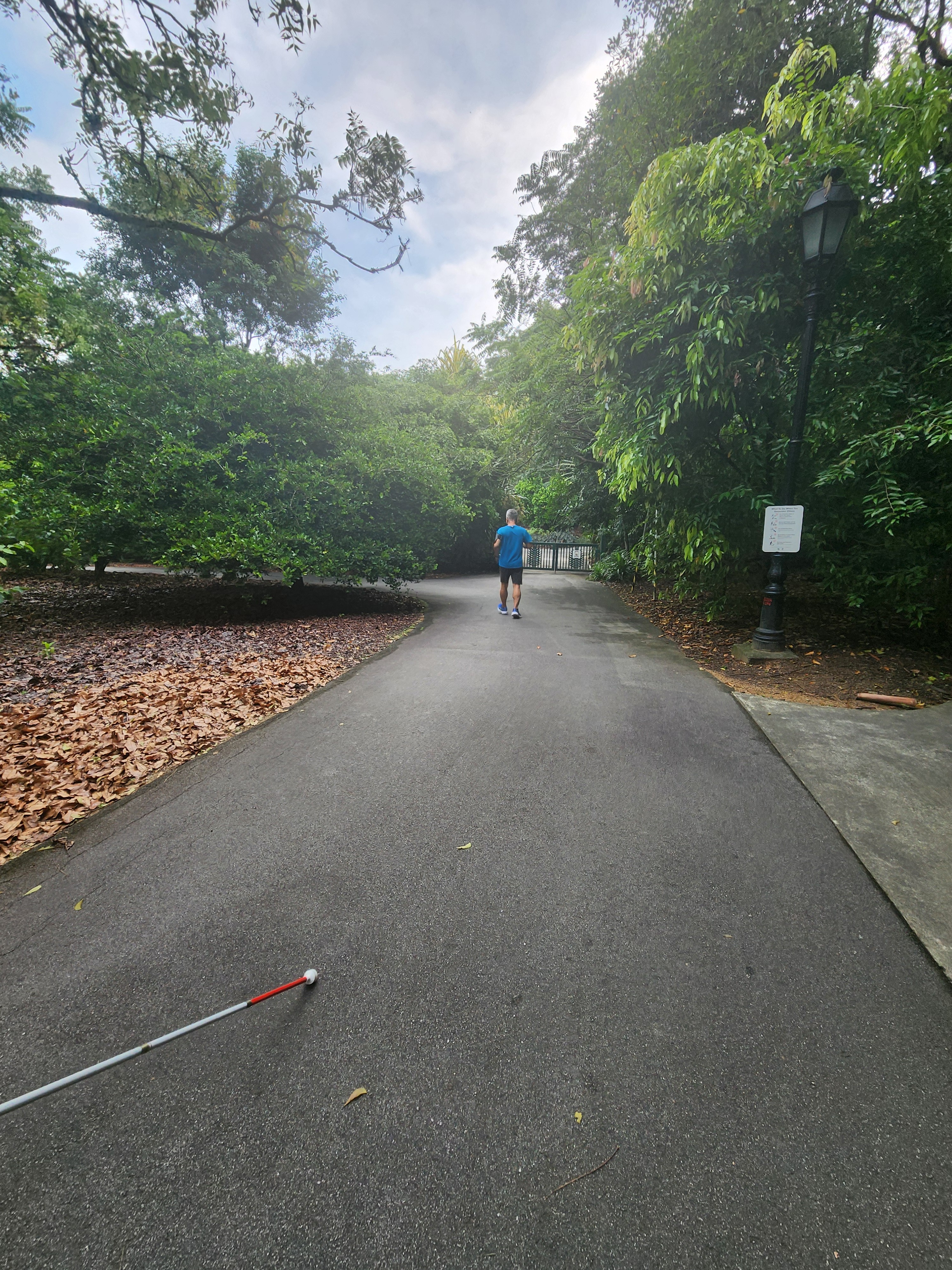
Photo from an observation
Findings, Insights & Opportunities
Some opportunities that we identified include:
“...for example, if it’s sunset, could it describe the sunset? If there are clouds in the sky, how bright the colours – I know it’s sunset so I want the details. Maybe it’s not practical but it’s enjoyable.”
— Quote from participant.
2. Research Artefacts:
User Personas
We created basic user personas for two purposes:
To define the constraints and motivations of user groups through identifying early adopters, so that we can strategically position subsequent stages of research.
To create a consistent lens through which we can communicate the needs and opportunities resulting from this stage of research, keeping the focus on users.
"A low-vision visitor"
This persona consisted of several characteristics, including:
Low-vision, with some residual eyesight
Likely to use a white cane
Already able to travel independently to certain locations
Goals that include motivations to visit outdoor spaces and a willingness and desire to explore unfamiliar locations independently
Experience Mapping
One resulting artefact we created for AiSee was a comprehensive experience map that consolidated all the findings and insights we found. This map details an example of an end-to-end journey for the persona we created, from starting a visit to the gardens from the user’s home, to areas that might be of interest in the park, and how they might plan to return home.
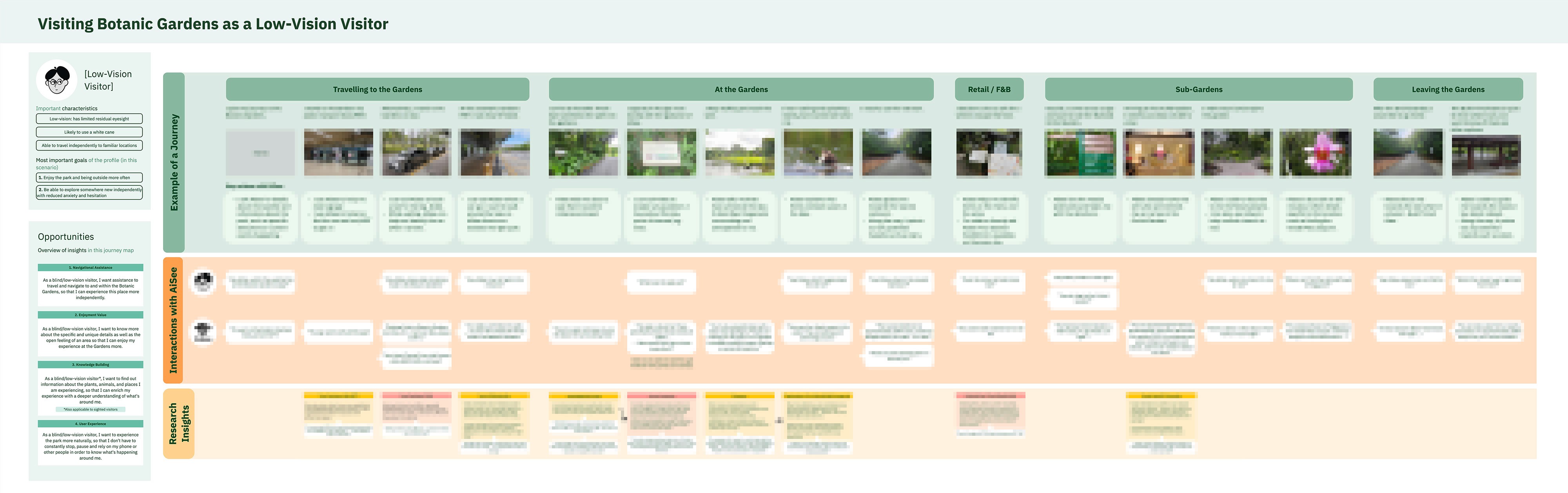
Preview of the experience map we created