ASSISTIVE TECH & ACCESSIBILITY
Enabling seniors to share their life stories
Memory Keeper is an assistive storytelling tool and digital companion designed to help seniors share and preserve their life stories.

The Challenge
Reminiscence therapy involves trained interviewers guiding seniors to share and reflect on meaningful life experiences, often using personal objects to stimulate memory and conversation. However, it is time-consuming, costly, and many centres are under-staffed to deliver consistent, high-quality therapy to every senior.
The Outcome
Memory Keeper is an assistive storytelling tool and digital companion designed to help seniors, including those with early-stage dementia, share and preserve their life stories. Through interactive conversation and reflection, a narrative is actively shaped in real time. The tool identifies storytelling/comprehension gaps and prompts follow-up questions to produce a coherent and personal story, written in the senior’s own voice. At the end, the story is compiled into a PDF to share with their loved ones.
Our Process
While these stages were non-linear and highly interconnected, they have been organized below to provide a clearer overview of our approach.
1. Research
To understand dementia and its place within Singapore’s healthcare ecosystem we synthesised general research, medical literature and interview insights from geriatric healthcare practitioners and dementia specialists into a dementia specific systems map and symptom-based personas representing various stages of early-stage dementia.
The focus was placed on early-stage dementia, where there are greater opportunities for symptom management and slowing progression (dementia is a neurodegenerative disease with no cure).
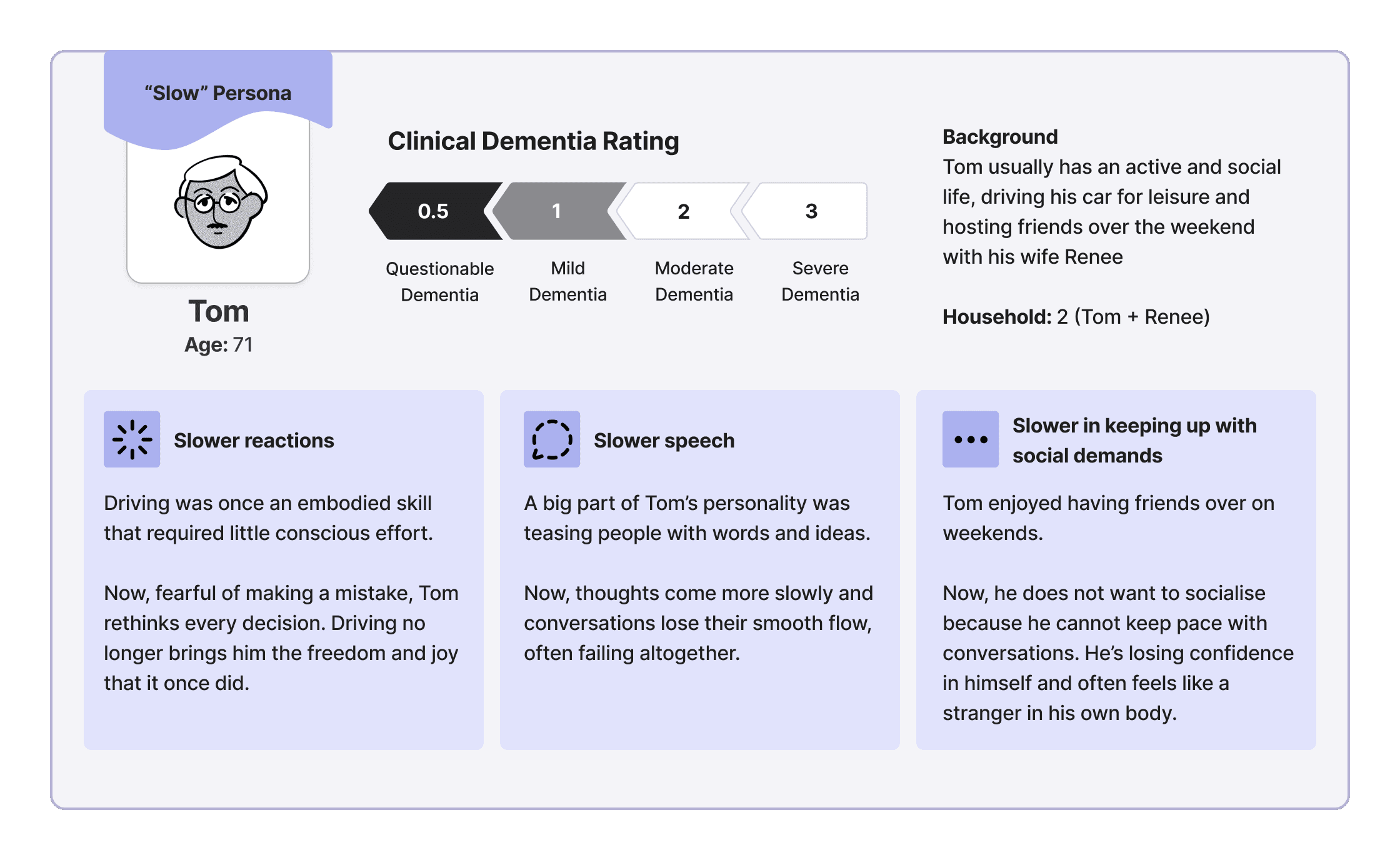
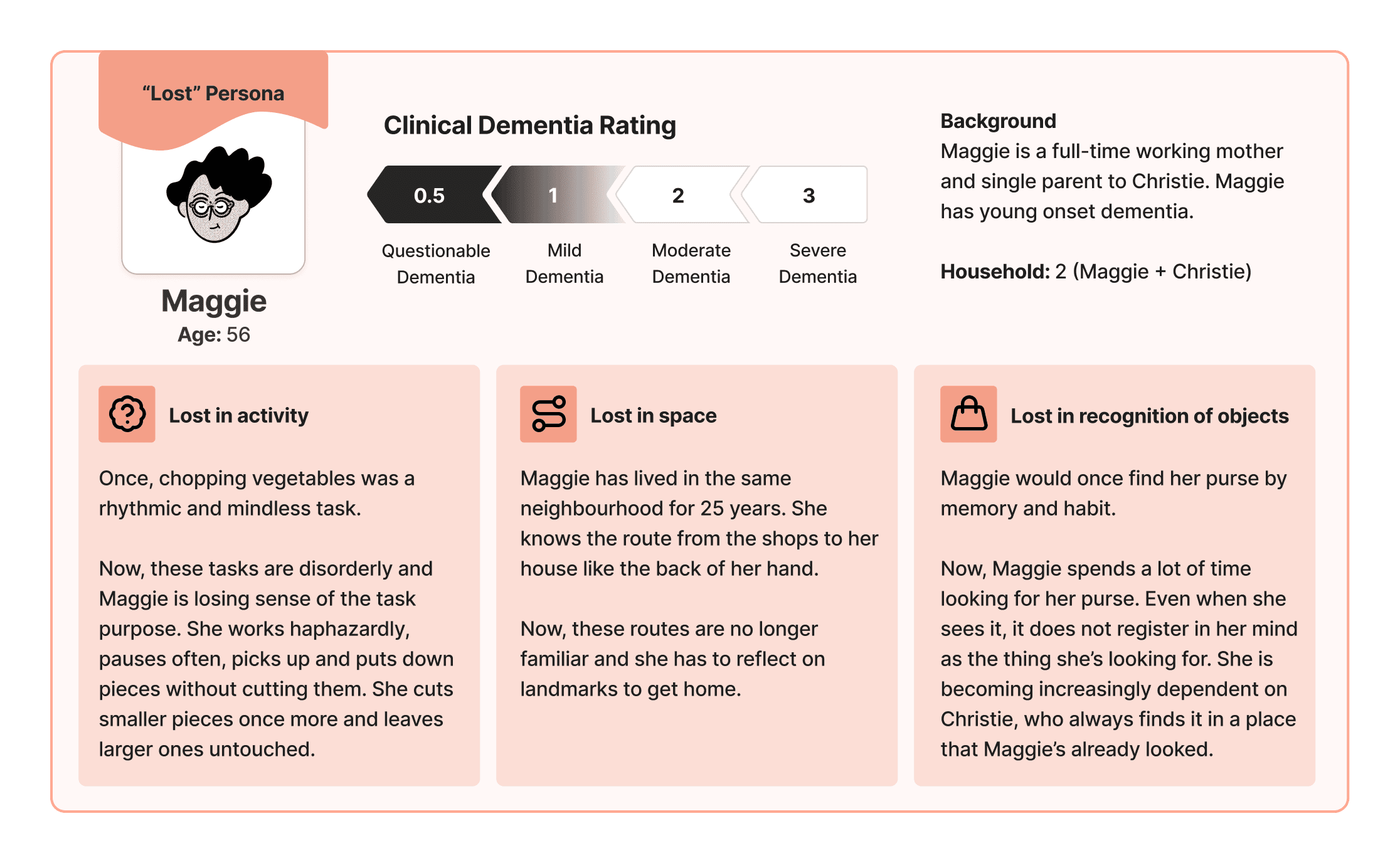
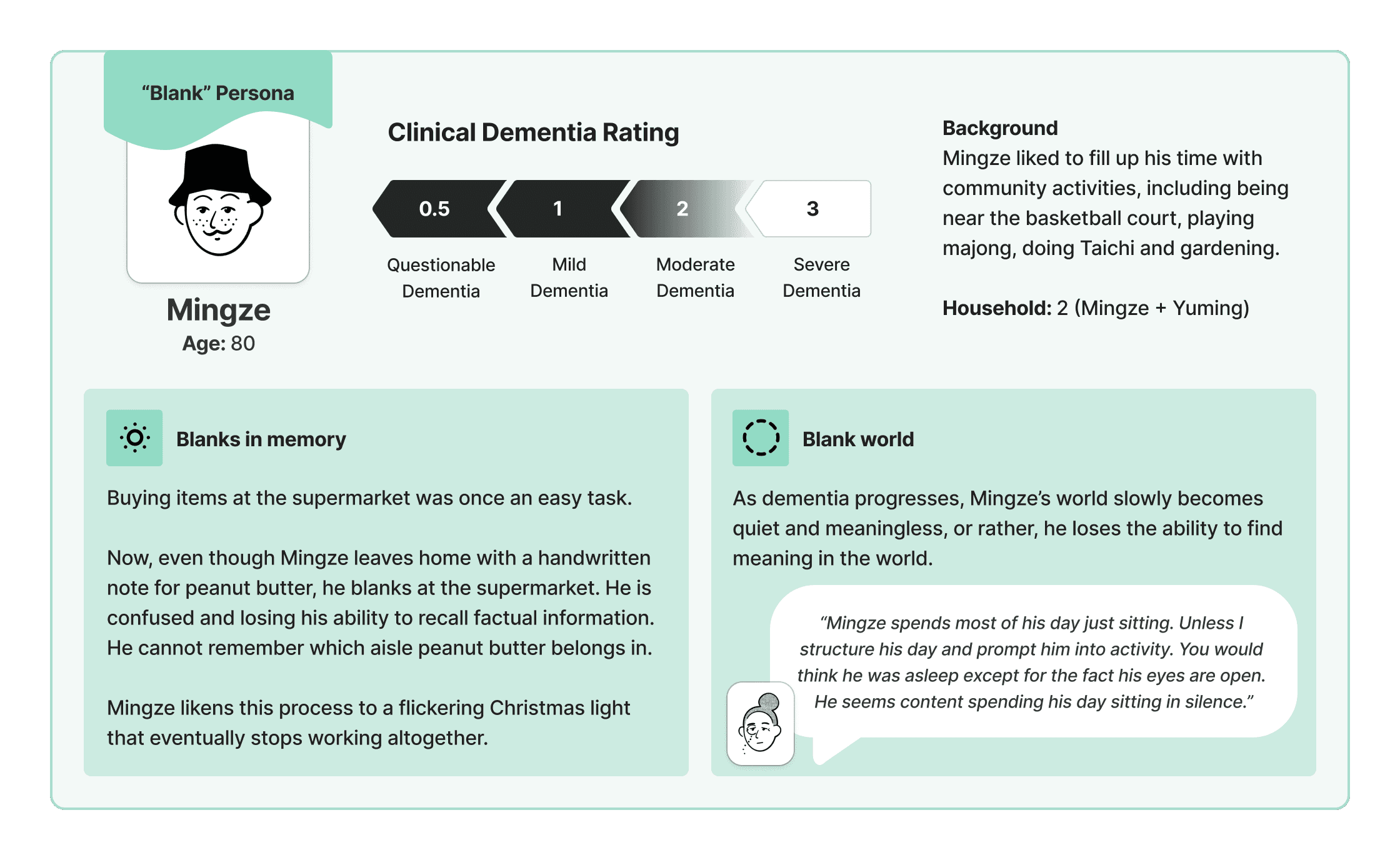
Simplified examples of "Slow", "Lost", and "Blank" profiles
Following further user research, we narrowed our focus to legacy preservation, or life stories that seniors wish to preserve with their families. Life stories can be preserved with reminiscence therapy, the outcome of which is often a legacy document; notes the facilitator compiled during therapy sessions and organised into coherent stories. The process of reminiscence therapy, of reflecting on past challenges and how one overcame them, was found to have many psychosocial benefits that slowed down cognitive decline.
Story preservation is for someone else—for family. Storytelling has the ability to bridge intergenerational gaps through empathy, making it integral to building strong family relationships across generations. Strong cross-generational relationships is important for “ageing well in place [in one’s own home and community]”, Singapore’s foremost ageing plan.
Storytelling weaves family history and values, cultural information, and life wisdom—intangible heirlooms longed for by the next generation, many of whom experience disconnection from their elders and family roots. Similarly, seniors face barriers in maintaining cross-generational relationships, many of which are linked to migration and the physical, emotional, and linguistic distances it creates. Thus, for oral storytelling to take place, many factors must align—including the preparedness of the senior to tell personal stories, and the readiness of the listener to receive them. Amongst the interviewees, oral storytelling rarely takes place. Thus, we conducted a next round of surveys and interviews with seniors and their family members and weighed their needs and perspectives against those of geriatric healthcare practitioners and reminiscence therapists in shaping the product direction.
Key insights
Reminiscence therapy facilitators:
There is a manpower shortage in care centres, 1 Healthcare practitioner : 5 Seniors (pain)
Facilitators need to be trained in interviewing competencies and turning raw interview data into coherent stories. This is time-consuming. (pain)
Knowing seniors' life stories allow healthcare practitioners to provide tailored care, making interactions easier and richer. (gain)
Recognising seniors’ past roles and contributions to society restores their sense of personhood and affords them respect. (gain)
“A story reveals that the patient used to be a ranger and for 30 years of his life he ate lunch outside. This patient doesn't have a big appetite and that’s a concern for the nurse signed to him. The nurse learns that he’s used to eating outside so she decides to bring him outside for his next meal. The patient's appetite improves.”
— Quote from facilitator.
Seniors (near retirement through to Seniors at care centres)
Seniors want to write about overcoming personal challenges and the lessons learnt. There is even a desire amongst some to publish their stories. (gain)
Storytelling elevates self-confidence/mood/energy levels and cultivates a sense of post-retirement purpose. (gain)
Seniors believe storytelling is important for intergenerational understanding and empathy. (gain)
Many have attempted to document their life stories, however, storytelling and writing does not come naturally to everyone, especially those with cognitive impairments. (pain)
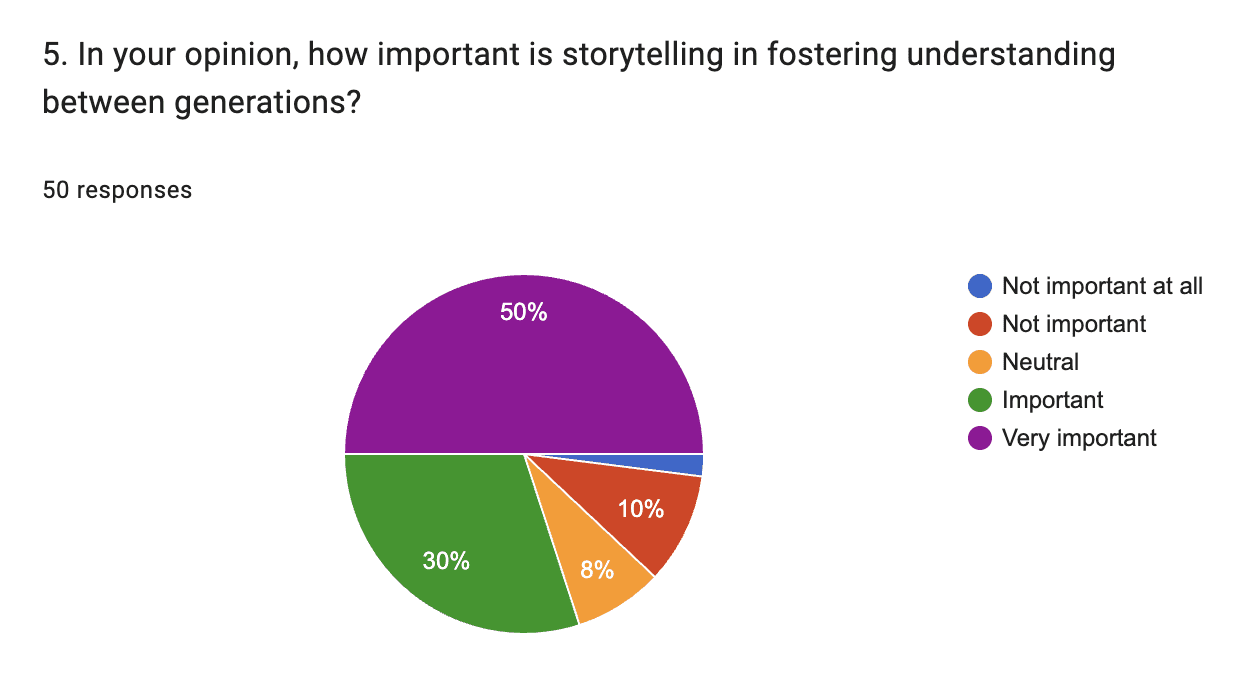
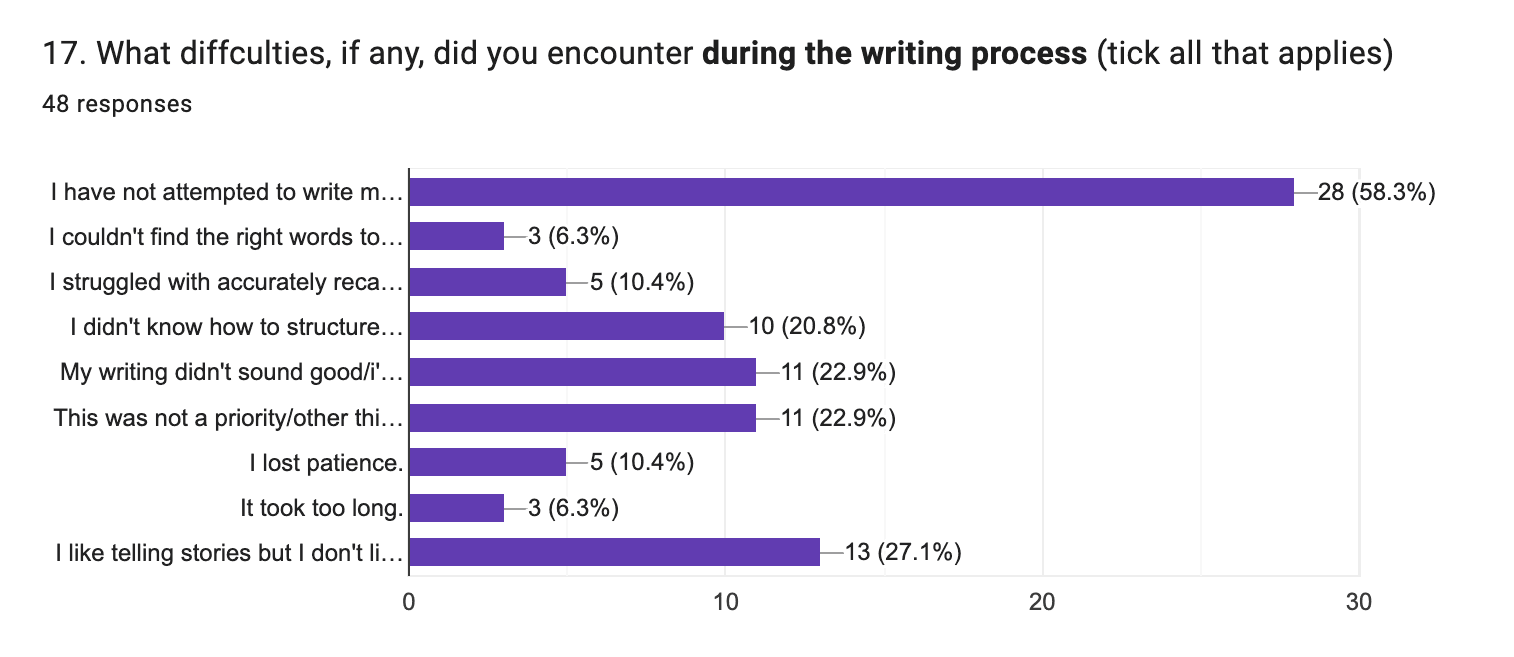
Examples of questionnaire responses
Grandchildren (20’s-30’s)
Many are out of touch with what goes on in the day-to-day lives of their grandparents. Contact, if any, is typically fleeting and superficial. (pain)
There is a general reluctance to ask for personal stories out of a desire to avoid making grandparents uncomfortable. (pain)
There is a shared belief that knowing one’s family history could lead to a better understanding of one’s own experiences in the family and overall identity. (gain)
Grandchildren believe they can benefit from the wisdom of their grandparents and that in turn, knowing their grandparents’ stories could make it easier to support them in their old age. (gain)
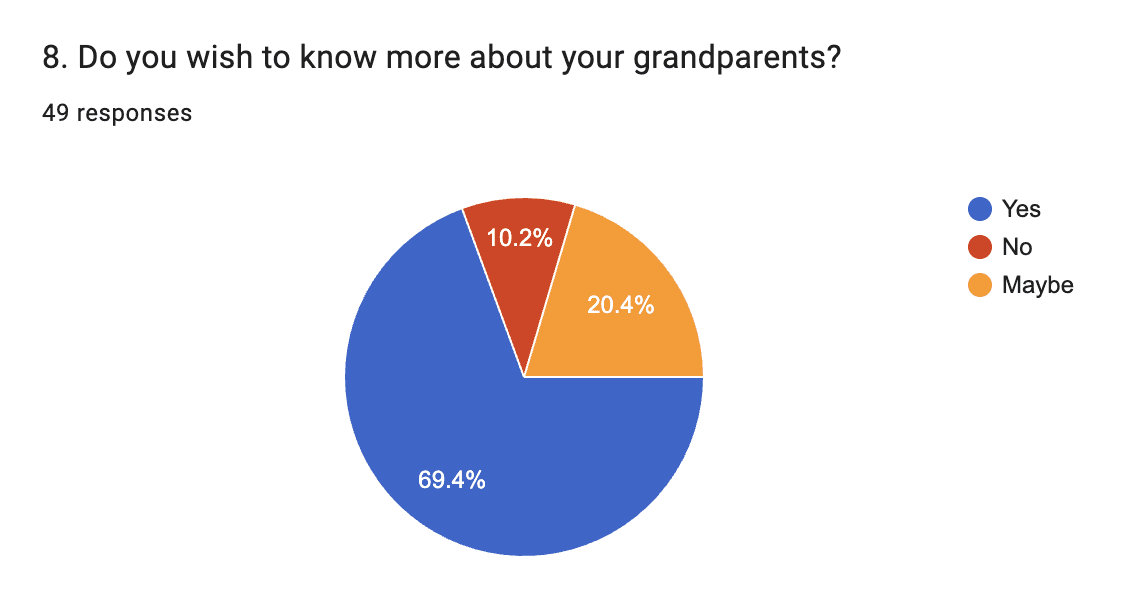
Example of questionnaire response
2. Product Design
AI-assisted storytelling app
The idea of a storytelling app providing the following value was formed:
Free up the bandwidth of healthcare practitioners by digitising time-consuming parts of the reminiscence therapy workflow, such as organising notes from therapy sessions and transforming them into coherent stories.
Option for 1:1 reminiscence therapy for seniors who are very motivated to produce a book of their life stories, enabled by training the latest machine learning models on interviewing competencies practiced by therapists and journalists.
Option for family members to participate in storytelling sessions, allowing them to ask questions and contribute their own recollections of shared memories, making it a collaborative storytelling experience. Participation is not contingent upon being in the same time zone, questions can be asked at any time.
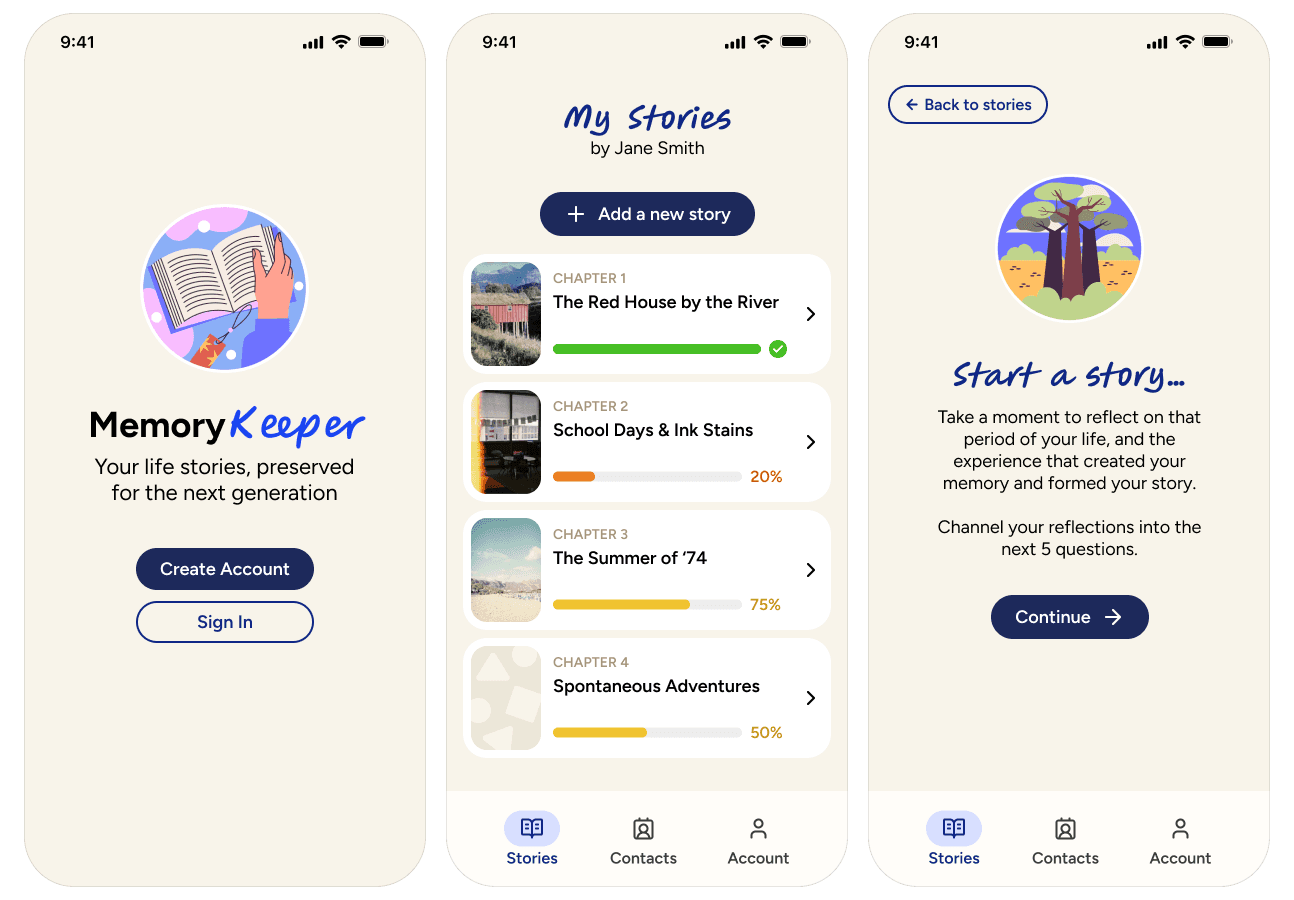
Screenshots of the app
3. Product Strategy
Product strategy and direction were informed by our understanding of Singapore’s healthcare ecosystem, alongside initiatives outlined in the National Ageing Plan. Significant progress was already underway to double the number of senior day-care centres “Active Ageing Centres” are being set up as the primary “go-to” point for informational, medical, practical, and social support for 80% of Singapore's aged population. Other aspirations outlined in the National Ageing Plan include a shift from reactive to proactive healthcare, greater personalisation of care, and elevating psychosocial wellbeing to be valued alongside medical and physical care. Significant investments had been dedicated to meet these goals.
Product decisions were intentionally aligned with national priorities and funding directions, and defensible within the broader healthcare ecosystem. This work formed a key component of a successful grant proposal that secured seed funding for the team to develop the app.
4. Go To Market
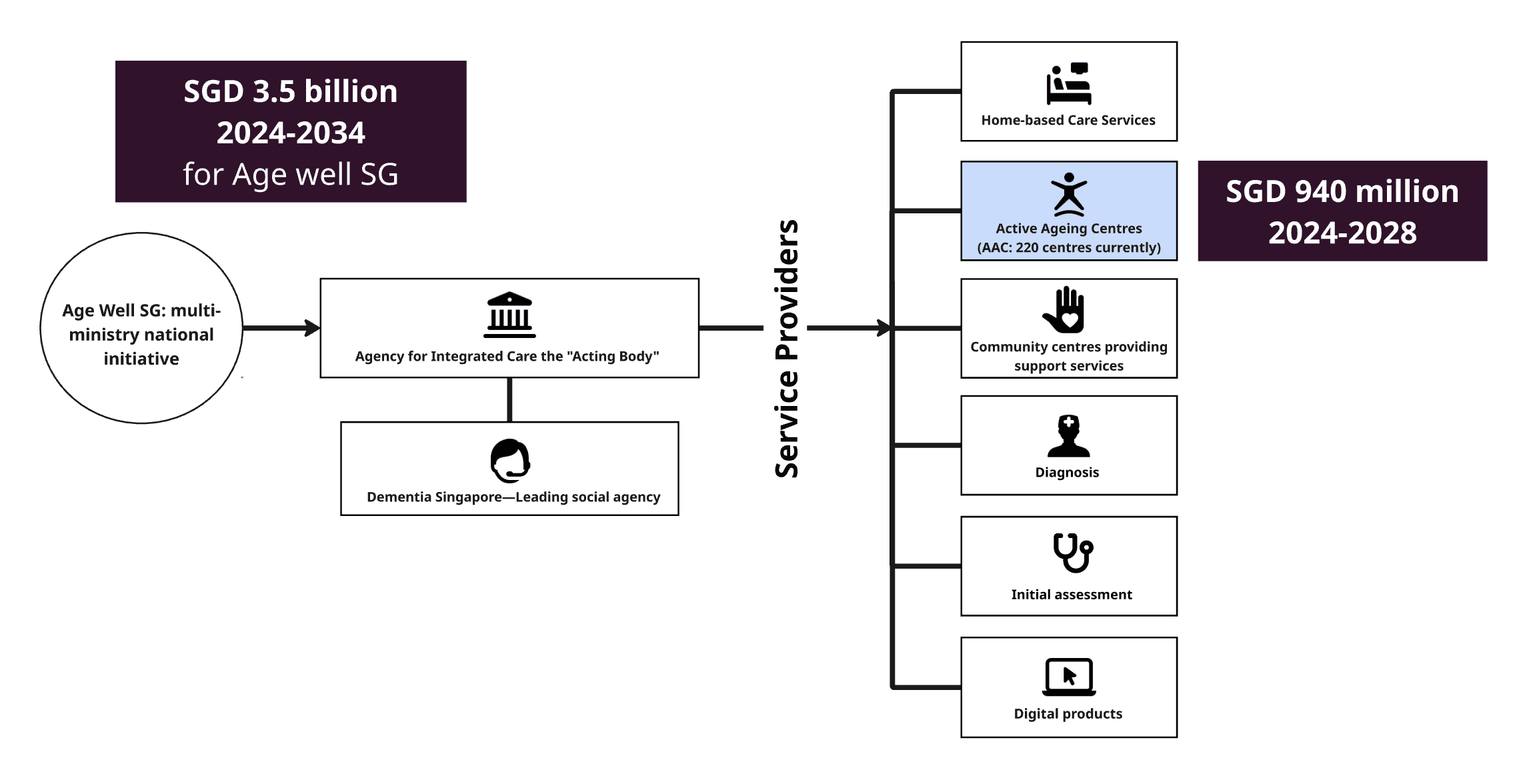
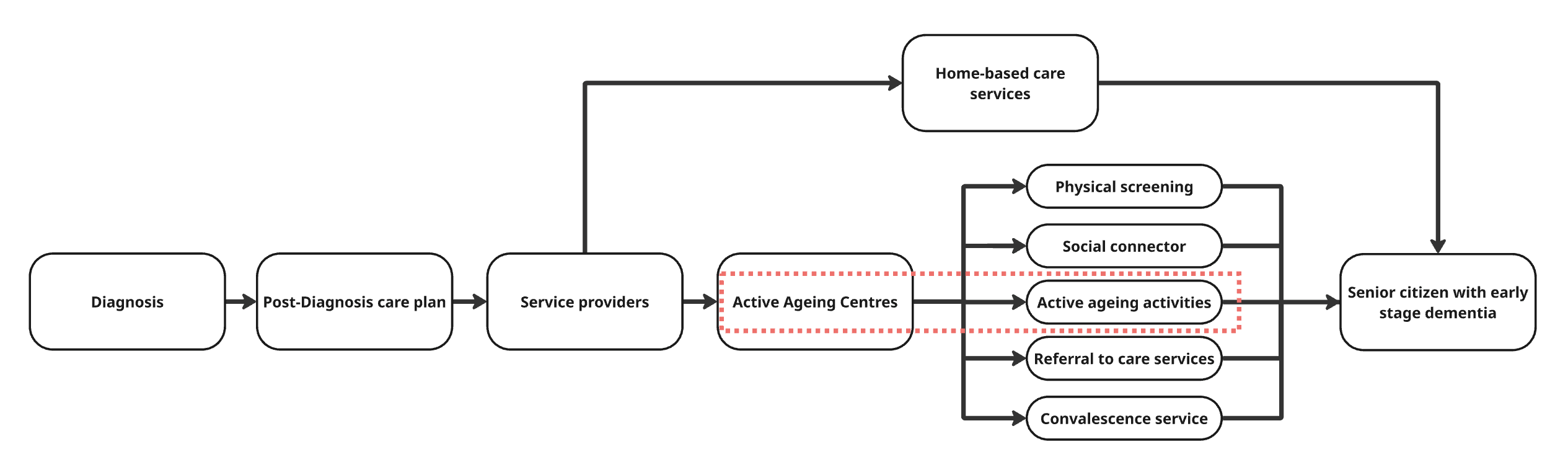
Ecosystems map (simplified) of Singapore's healthcare system for a person with dementia
Customers and users
Active Ageing Centre (AAC) managers—customers
AAC managers look to offer a more personalised care model that prioritises psychosocial wellbeing alongside medical and physical health. The platform supports centres in this goal, by digitising time-consuming parts of the therapy workflow, the platform frees up staff bandwidth for high touch support. This is also aligned with performance indicators tied to centralised funding.
Seniors within AACs—users
AAC managers estimate that early-stage dementia prevalence may be as high as 50% amongst seniors in their centers. These managers act as knowledgeable intermediaries, helping to identify seniors who may benefit from the platform as a tool to remain cognitively engaged.
Independent seniors approaching retirement—customers
Seniors transitioning out of work and into retirement may use the platform directly to document their life experiences into a book of stories.
Market size
AAC: there are 220 centres across Singapore serving 80% of Singapore's aged population—roughly 631,000 seniors
Seniors approaching retirement (aged 60-64): approximately 293,000 (Source.)
The beachhead market size is approximately 29300, calculated as 10% of seniors approaching retirement (aged 60–64) from our survey findings who had, in the past, already attempted to document their memories in written form.
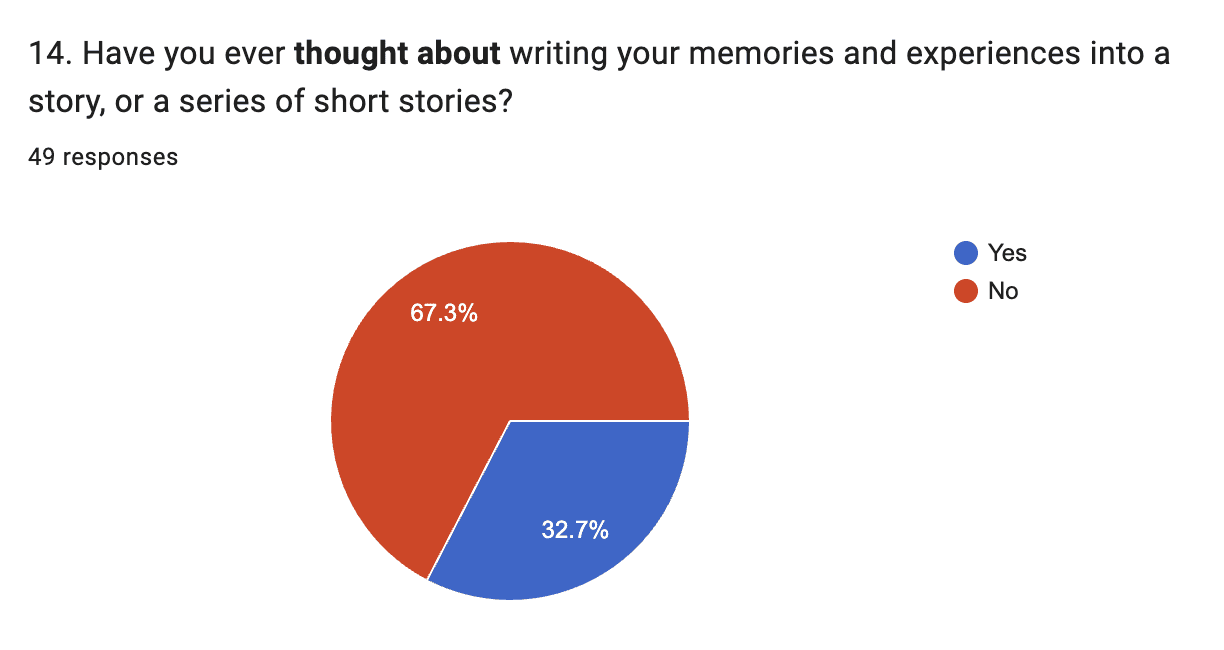
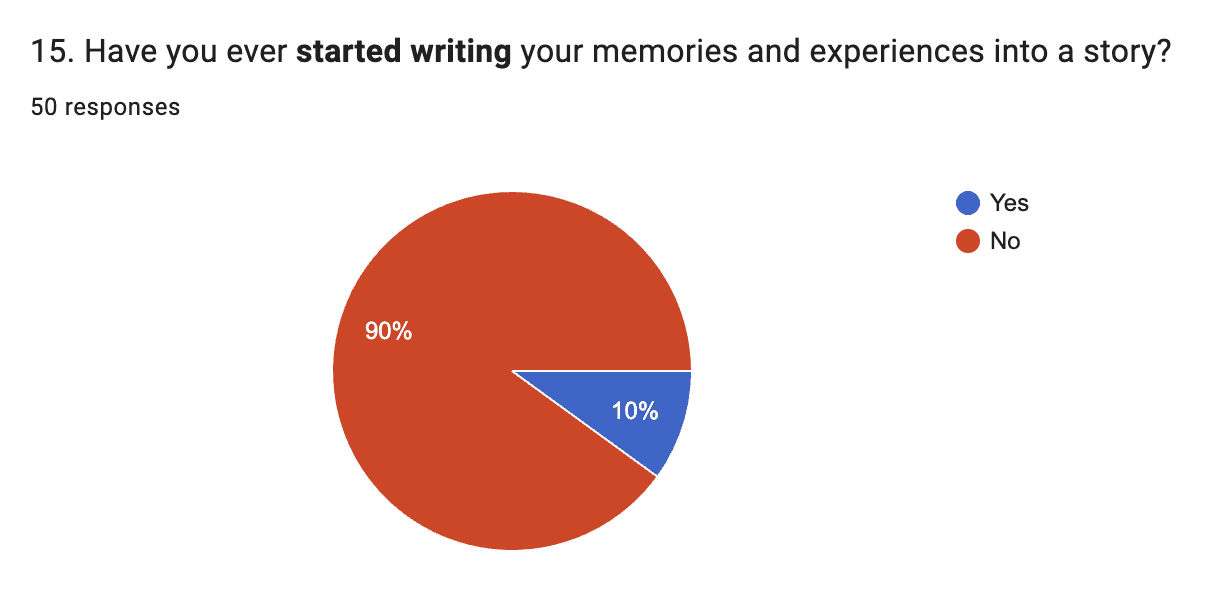
Examples of questionnaire responses
Business model
B2B2C platform licence per centre per month to Active Ageing Centres
Activities in AACs are ongoing
There’s a tangible output—stories compiled into pdf—which can be used as “proof of impact” for funders, particularly relevant given "AAC 2.0" transformation which has seen a 50% increase in annual budget (from 400,000 to 600,000) for enhancing services in domains like cognitive stimulation.
Low-mid range pricing measured against other SaaS digital products providing psychosocial support in AACs.
Tied pricing model based on number of active senior profiles per centre
B2C one time payment for a standard sized memoir: up to 25 chapters within 300 pages.
One-off payment/clear upfront costs, measured against existing products in the market with similar value offerings.
Pricing incentives for milestones to play into seniors’ motivation to produce and publish their memoir
A one-off payment makes the service "giftable." Adult children, who often facilitate technology purchases for their parents, are more likely to buy a "Story Package" as a one-time gift.
Customer relationships
Pilot and clinical collaboration
Launch a pilot study with selected Active Ageing Centres, in collaboration with researchers from the National University of Singapore and geriatric medical practitioners who value personalised, psychosocial care. The pilot will serve as a live environment to iterate and refine the app, while generating evidence through a published outcomes paper.
Phased expansion across AACs
Following pilot validation, gradually introduce the platform across AACs in Singapore, leveraging demonstrated outcomes to support adoption and funding alignment.
Community and grassroots partnerships
Build relationships with grassroots networks that organise active ageing activities in AACs and community spaces, such as Senior Go Digital programme, HAPPY programme, and RSVP Senior Mentoring programme. These partnerships provide opportunities to introduce storytelling as an active ageing activity, all the while expanding our reach in the Age Well SG service ecosystem.
Government and corporate transition programmes
Engage with programmes supporting seniors transitioning from full-time work into part-time roles, mentoring, or volunteerism. Programmes that emphasise intergenerational connection, legacy-building, and advance care planning position storytelling as a meaningful way for seniors to share wisdom, maintain relationships, and plan for their medical future.